

Structural Integration
Structural Integration also known as ATSI or SI is a manual therapy modality that was founded by Dr. Ida P. Rolf in the 1940s.
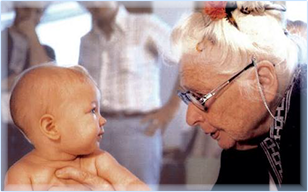 In contrast to the conventional
belief in single-muscle theory that had dominated manual therapy practice for decades, Dr. Rolf advanced a revolutionary whole-body
approach rooted in the body's network of connective tissue. She succinctly
described the human body as "it's all connected through the fascia"1. This principle became the foundation of her Structural
Integration teachings at
 the Esalen Institute in Big Sur, California, in the 1960s, and later at the Rolf Institute in Boulder, Colorado,
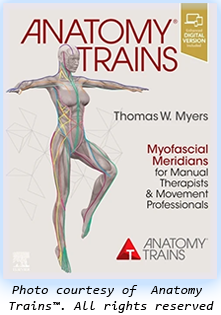
in the 1970s. The evolution of Structural Integration is also credited to Thomas Myers, a student of Dr. Rolf and instructor of Fascial
Anatomy courses at the Rolf Institute in the 1990s. Honouring Dr. Rolf's prophetic desire to be a catalyst
for the advancement of Structural Integration as well as of the therapists using it, Thomas Myers formed a school called Anatomy Trains
in 1999. Anatomy Trains merged his fascination of human anatomy with Dr. Rolf's Structural Integration teachings. By mapping the fascial
and myofascial meridians in the human body, Thomas Myers had a profound impact on this modality.
The primary purpose of Structural Integration is to balance fascia, more commonly known as
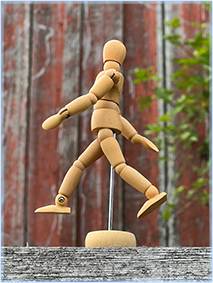 connective
tissue, across all planes of the body with relation to gravity. Structural Integration therapists work with the fascia surrounding
and supporting muscles and joints in order to promote long-term, whole-body improvements. This treatment style brings the body
into postural alignment and leads to more efficient and comfortable movement. By using slow, direct, and deep tissue treatment
over the course of twelve treatment sessions (referred to as a '12-Series') in combination with the client's intentional movement, the body's
fascia and frame can be organized in relation to gravity.
This treatment is designed to release habitual postures and movement patterns as well as compensations such as chronic tension. These changes can also remedy chronic pain, muscle stiffness, postural
deficits, and many other symptoms including decreased range of motion and accompanying atrophy.
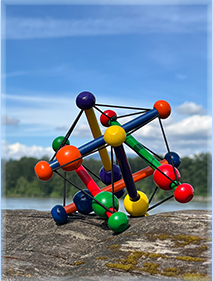 Structural Integration as taught
by Thomas Myers is performed over the course of twelve sessions with each session addressing different areas of the body.
The initial sessions of the 12-Series work with the Sleeve, which encompasses the superficial, non-core structures of the body.
The intermediate sessions focus on the Core, which describes both the vertical support for our frame as well as the
abdominal core. The final sessions are integrative treatments with the central purpose to bring the Sleeve and Core in sync with
one another, thereby creating cohesion and organization in the body.
The ATSI Structural Integration 12-Series follows this recipe:

Recommendations regarding at-home exercises and movement are discussed with each client as appropriate to
reinforce the  changes made during treatment. Even though Structural Integration techniques can be applied singularly outside of a
12-Series treatment block, techniques applied in a piecemeal fashion won't produce the systemic, long-term changes achieved by a
12-Series.
In my 30+ years as an RMT, I have trained in and tried many different techniques and modalities. In my opinion, Structural Integration is hands down the most effective treatment style for making long-term bodily change such as relieving chronic pain, improving posture, and improving flexibility. These improvements are especially notable as they allow clients to age comfortably and remain active late in life. Small adjustments in posture and alignment can make a big difference in how freely we move, how comfortable we are, and even how energetic we feel.
I met Thomas Myers at the 2nd International Symposium on the Science of Touch in Montreal, Canada,
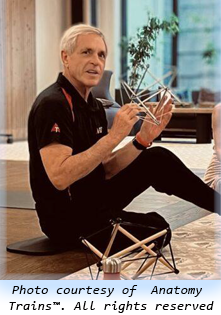 in 2004 and
immediately realized that I had more to learn about this form of manual therapy. I was intrigued by his view of the human body as a network of
fascia and his ability to quickly improve clients' posture and comfort. Being eager to immerse myself in this modality and learn its techniques,
I registered to take my very first Anatomy Trains seminar in 2005. After receiving instruction and learning the foundational Anatomy Trains theory
directly from Thomas Myers at this seminar, I reinforced those concepts and acquired additional fascial release skills by completing
the Anatomy Trains Techniques Video Series. In this 10-part self-study program, Thomas Myers taught the anatomy of each fascial line as
well as the corresponding techniques for myofascial release of those lines. He also provided supplemental instruction for these techniques
while overseeing students as they practised with each other. To fully integrate these concepts into my skillset, I practised the Anatomy
Trains fascial techniques with clients in my daily RMT practice and also with colleagues at monthly study groups over the next two years.
The benefits of integrating the Anatomy Trains fascial lines into my massage therapy practice were undeniable and overwhelming. Because the
Anatomy Trains model was so helpful to my clients, I felt compelled to undertake more training in this modality.
My journey in the Structural Integration realm continued with my participation in and completion of an intensive Anatomy
 Trains Structural Integration (ATSI) training program in Seattle, Washington in 2007. Thomas Myers was one of three instructors who taught
this program two weeks per month over a 6-month period. After completing in excess of 500
hours of SI training in 2007, I had the tools to make significant, meaningful, and long-lasting changes in my clients' bodies and
lives. This training fed my lifelong passion to understand human anatomy, which started when I opened the transparent anatomical
overlays in the World Book Encyclopedia for the first time at the age of 4 or 5 years old. The ATSI training became a springboard
for learning other modalities such as Visceral Manipulation, CranioSacral Therapy, and Neurovascular Release, which also treat
fascia but in different ways. In my pursuit of a deeper understanding of Structural Integration and to encourage the next generation
of therapists, I volunteered annually as a teaching assistant for introductory ATSI courses in Canada and the United States from 2007 to
2019.
1 Myers, Thomas. A Brief History of Anatomy Trains. https:/www.anatomytrains.com/about-us.

Feel Like Yourself Again!
604.513.8161