

Somatic Massage Therapy
Somatic massage therapy (SMT) is
a popular holistic approach that fosters the body's natural healing ability by releasing trauma, stress, and emotions trapped in its
tissues. As a subspecialty within the field of somatic therapy, SMT is guided by the common tenet that the body holds onto what the
mind cannot manage and ultimately becomes a receptacle of these experiences. This field evolved over the past century as more
therapists openly acknowledged the toll that trauma, stress, and emotions exert on the body. Only by embracing the mind-body connection
can the often unnoticed and stored trauma, stress, and emotions be addressed. Unlike other subspecialties, somatic massage therapy
integrates manual therapy and movement to re-orient or resync the mind and body.
The word 'somatic' is derived from the Ancient Greek term 'soma', which generically translates to "the body of an organism".1 This definition prevailed for years until the 1970s when Thomas Hanna, founder of Hanna Somatics™, referred to the soma as "the living body in its wholeness". The term 'somatics' by extension describes an approach or therapy that treats the body as a whole rather than solely the physical manifestations it exhibits. This therapy is rooted in the body's inherent ability to heal itself, be programmed to function more efficiently, adjust (reset) sensory regulation, and rebalance itself. Recognizing that physical symptoms can be both voluntarily and involuntarily triggered within the body by various physical and/or non-physical mechanisms, somatic therapists use techniques that mimic the body's normal processes to reprogram it.
Somatic massage therapy is an outside-in and bottom-up approach focused on the whole body. SMT is not talk therapy and doesn't replace traditional counselling which, in contrast, is considered a top-down approach. Somatic massage therapy is often used in conjunction with counselling treatment since SMT can correct unhealthy habits and alleviate undesired symptoms through sensory reprogramming.
Much like other somatic therapy subspecialties, somatic massage therapy is gaining in popularity due to its transformative benefits and because it offers hope when modern medicine practices have been exhausted, only manage symptoms, and don't address the root cause.2 By fostering awareness of the mind-body relationship and facilitating the body's release of trauma, tension, and emotions stored well past the typical recovery period, this sensory-based treatment can break the otherwise relentless injury-pain-trauma cycle.
 Traumatic experiences, overwhelming emotions, and chronic stress are rarely processed only mentally. More often
than not, those memories, emotions, and trauma get stored both physically and physiologically in the body's nervous system, muscles, and
tissues. Left untreated, they may manifest in unexplained ways such as anxiety, bodily tension, digestive upset, fatigue, jaw clenching, poor
coordination, nausea, pain, postural disorders, reduced mobility, shallow breathing, and teeth grinding. By using techniques such as CranioSacral
Therapy, Neurovascular Release, Structural Integration or Visceral Manipulation with somatic movement and self-care practices, many conditions
including anxiety, chronic pain, digestive disorders, emotional regulation disorders, headaches, joint pain, musculoskeletal dysfunction,
and Post-Traumatic Stress Disorder (PTSD) can be alleviated.
I've completed thousands of hours of training in somatic massage therapy over the past three decades. I received this training through lecture and practical modules covering somatic therapy topics within the Structural Integration program at Anatomy Trains®, Visceral Manipulation program at the Barral Institute, CranioSacral Therapy program at the Upledger Institute Inc™, and Neurovascular Release program founded by Kier Schumacher. In the early 2000s, I also completed the Clinical Somatic Education program developed from Hanna Somatic Education© concepts and taught by Andrew Teufel, RMT, CHSE, the owner and Somatics instructor at Applied Somatics. Not only have I incorporated pandiculation, a manual therapy technique developed by Thomas Hanna, into my daily RMT practice, but I also offered Hanna-inspired Cat Stretch classes for nearly a decade to teach clients ways to manage their bodies between therapeutic treatments. Witnessing the dramatic transformations in patients receiving SMT motivates me to continue advancing my training in this area so I can offer the most current techniques and best practices in the field.
The Evolution of Somatic Therapy
The practice of whole-body therapy isn't new. Its origins can be traced back thousands of years to the spiritual and medicinal practices of various cultures around the globe. This mind-body connection was integral to the therapeutic care and treatment administered by holistic healers across the ages and throughout the world from ancient Asia, Greece, and India to First Nation healers in North America, Aboriginal Ngangkari in Australia, and shamanistic communities throughout East Asia.
Somatic therapy has evolved into numerous subspecialties that offer a contrast to the mechanistic and pharmacological approach of traditional Western medicine. These specialized fields of study include:

Although these therapies share the common thread of mind-body connection, the techniques and effects of each differ widely and may provide more comprehensive, longer lasting results when combined. It's important to recognize that the 'talk-type' somatic therapies like somatic psychotherapy and somatic experiencing are wholly different from 'hands-on' therapy like somatic massage therapy.
This whole-body approach, which was once only practised in ancient civilizations and remote villages across the world, has become an international movement. Its evolution worldwide over the past century can be attributed to the works of Frederick Matthias Alexander, Dr. Ida P. Rolf, Moshé Feldenkrais, Thomas Hanna, and Dr. Bessel van der Kolk.
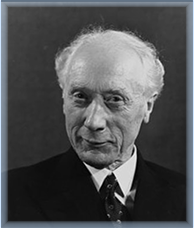 Frederick Matthias Alexander, an Australian, was an influential figure in the field of somatic therapy starting in the 1890s
and continuing until his death in 1955. Vocal problems that he experienced as an actor, which were caused by chronic laryngitis,
served as a catalyst for his development of a system of controlled movements to release muscle tension. His work which is known as
the Alexander Technique was based on the observation that use and misuse dictates function. Because he believed that repetitive
misuse leads to destructive habits or movement patterns, he emphasized the importance of mindfulness and awareness in preventing
unwanted tension, improving posture, and increasing mobility. Alexander proposed that the means whereby we move requires attentiveness
and thoughtfulness rather than mere rote action.3 Soon after F.M. Alexander regained the normal use of his voice, he began
teaching this mindfulness approach to others.
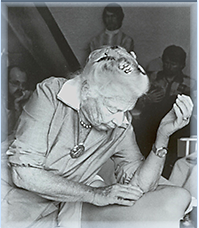 Similarly motivated by her own personal health struggles with spinal arthritis and chronic pain, Dr. Ida P. Rolf, an
American biochemist, also had a profound influence on the field of somatic therapy. She developed a manual therapy that she called Structural
Integration (SI) in the 1940s based largely on yogic principles and the movement restrictions she observed as yogis performed yoga. Dr.
Rolf advanced a revolutionary whole-body approach that restores structural balance by working with fascia. She succinctly described the
human body as "it's all connected through the fascia".4 Seeing the body as a network of connective tissue at its simplest
level, she developed techniques to release dried out, rigid, sticky, and/or thickened fascial connections. Releasing fascia in this
fashion addresses undesired tension, restrictions, and compensations throughout the body, thereby encouraging efficiency, reducing pain
and fatigue, and improving overall wellbeing.
Drawing from Alexander's somatic movement principles, Structural Integration is specifically designed to encourage mobility and increase support through alignment and organization of individual components. Dr. Rolf's core belief that structure dictates function suggests that a body out of balance doesn't function properly and must compensate for such dysfunction. Although the body can temporarily adapt, it will eventually succumb to systemic fatigue and injury without intervention. SI techniques, which incorporate somatic theory, achieve this much needed intervention by realigning the body structurally and resetting the mind-body relationship.
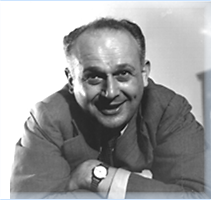 Like F.M. Alexander and Dr. Rolf before him, Moshé Feldenkrais' personal health challenges sparked his advancements
in the field of somatic therapy and were similarly resolved by those same achievements. It was his penchant for martial arts, interest
in movement and human development, and studies in engineering and physics that provided the solution to his medical dilemma. When
Feldenkrais reinjured his knee in his 30s, his physician insisted that surgery would be necessary to repair it. Fearful that such an
invasive procedure would leave him disfigured, limit his mobility, and be painful, he instead devised a treatment plan to rehabilitate
his knee pain based on his engineering and martial arts background. The mind-body re-education techniques that Feldenkrais used for
self-treatment laid the framework for the therapeutic model that he later devised, a model that has been practised around the world for
over half a century.
Feldenkrais was a particularly industrious young man, who relocated at a young age with his family to Palestine
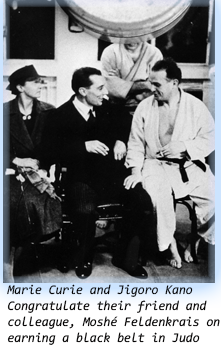 from territory in Russia that is now part of Ukraine. Over his lifetime, he held many titles including author, engineer, judo instructor,
laborer, land surveyor, mapmaker, physicist and weaponry officer for the British Admiralty. After moving to Paris in his late 20s,
Feldenkrais also earned an engineering degree from Ecole des Travaux Publics des Paris and a Doctorate in physics from the University of
Sorbonne. Renowned chemist and physicist Marie Curie was one of his teachers, and Feldenkrais became the research assistant to Jean
Frédéric Joliot, a nuclear chemist and 1935 Nobel Prize laureate in Chemistry for the discovery of man-made ('artificial') radioactivity,
which was instrumental in the development of medical imaging technology. MRI machines, which use radioactive isotopes to diagnose diseases,
are the most notable examples of this advancement.
Feldenkrais' personal pursuits rather than his professional ones were the impetus for his contributions to the field of somatic therapy. The transformative nature of his work was a direct reflection of his desire to be self-reliant, his initiative to self-discover, and his interest in self defence. Feldenkrais practised jiu-jitsu from a young age, went on to learn judo from the founder of modern Judo, Jigoro Kano, and taught unarmed combat principles known as Hadaka-Jime to fellow servicemen in World War II. Feldenkrais earned a black belt in judo in 1936, reached 2nd degree black belt status in 1938, and taught judo for many years thereafter. This self-defence training taught him about body mechanics and was the basis of his movement pattern system called the Feldenkrais Method. Instead of forcing contracted muscles to deactivate by stretching, the Feldenkrais Method induces muscular relaxation through therapist-assisted movement of the patient's muscles. It is likened to kinetic mirroring because the prescribed movements facilitate contraction rather than counteract or resist it.
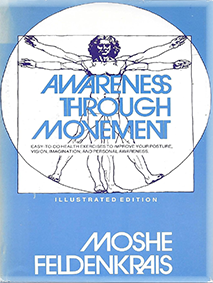 The Feldenkrais Method is a two-pronged approach consisting of a manual therapy or assistive component known as Functional
Integration (FI) and a self-care component based on movement learning processes known as Awareness Through Movement lessons (ATM). Functional
Integration was intended to reinforce the ATM learning processes, which could have included any number of 600 or so movements that Feldenkrais
had developed to accommodate the varying abilities of patients. His methodology focuses on correcting muscle patterns, particularly subconscious
ones, that lead to dysfunction and atrophy (physical degeneration).
Unlike the others, it wasn't a personal medical problem that delivered Thomas Hanna into the world of somatic therapy. Rather,
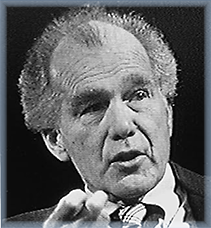 his study of neurology and philosophy influenced his interest in somatology, a belief that the physical patterns by which we move are caused by
the memory of experiences stored in our bodies. Because body movements are intertwined with psychological processes, the mind can be programmed
to replicate those same signals in the future to initiate similar movements. This concept mirrors the learning process by which babies learn to
crawl, eat, sit up, and walk.
While techniques of F.M. Alexander, Dr. Rolf, and Moshé Feldenkrais were heavily rooted in somatic theory, their methods didn't directly refer to its concepts or reflect it in name. Thomas Hanna was the first notable figure to publicly embrace the field of somatic therapy in the 20th century, and he was credited with coining the term 'somatics' in 1976.
 Hanna's impact on the field of somatics began years earlier and coincided with the transformative effects he personally experienced. In
1969, before his introduction to the Feldenkrais Method, he wrote the book, Bodies in Revolt: A Primer of Somatic Thinking. When Thomas Hanna
was finally introduced to Feldenkrais' work in the 1970s, he was so captivated by it that he signed up to personally train with Feldenkrais. Hanna
not only became a certified instructor of the Feldenkrais Method, but also developed a close friendship with Feldenkrais. In 1975, Hanna began
teaching the Feldenkrais Method at the Novato Institute for Research and Training in California, thereby becoming the first person to offer the
Feldenkrais training program in the United States. Years later, Thomas Hanna developed a somatic therapy program called Hanna Somatic Education® (HSE) that was undoubtedly
influenced by the Alexander Technique and the Feldenkrais Method.
Like the two-pronged Feldenkrais Method, HSE is a gentle approach consisting of a manual therapy component and a practice component.
Hanna's approach, however, is based upon the premise that the body is a vessel of human experience. Through movement re-education techniques,
manual therapists can alleviate the root cause of muscular pain.  Practising proper movements guides the brain through sensory motor training
and methodically creates the desired awareness, motor control, and sensations of the muscles. Hanna's neuromuscular movement retraining was
specifically designed to counteract what he called "Sensory Motor Amnesia", which he believed was caused by poor movement habits.
HSE's therapist-guided techniques employ a principle known as pandiculation, which is the forced contraction of a tense muscle and its slow release. This process naturally resets muscle tissue by sending feedback to the brain when tension is released. Pandiculation differs from other relaxation techniques such as stretching and massage in that it provides longer-lasting relief.
Much like Feldenkrais' Awareness Through Movement lessons, Hanna Somatic Education® includes a movement component. This series of movements is called the Cat Stretch and is designed as a 10- to 15-minute daily program to release muscle tension and increase mobility. When used in conjunction with the Cat Stretch, HSE manual therapy can re-sync the mind and body, change unhelpful habits, break an otherwise perpetual trauma-injury cycle, reintroduce positive sensations, and reestablish proper motor control. Hanna Somatics techniques will produce the desired voluntary release of tension with even the smallest intentional movements.
 Bessel van der Kolk made still other monumental contributions to the field of somatics. He is a Dutch-American psychiatrist
internationally recognized as an expert on trauma. After graduating from the University of Chicago School of Medicine in 1970, Van der
Kolk studied psychiatry at Harvard's Massachusetts Mental Health Center. He devoted his career to studying the effects of traumatic
stress on the body and to developing treatments for children and adults suffering from traumatic stress and developmental trauma.
Of particular note, he advocated for the medical community's recognition of PTSD throughout the 1970s and was successful in getting PTSD included as a recognized diagnosis in a clinical psychiatric reference manual. This formal recognition of PTSD was more than just a label. It resulted in the creation of corresponding diagnostic criteria, an assessment structure, and specific classification for billing and statistical collection. That first step was a catalyst for public awareness of the disorder that afflicted millions of people. Van der Kolk brought PTSD further into mainstream discussions in 1984 by organizing the first ever symposium hosted by the American Psychiatric Association to highlight the disorder.
His interest in PTSD originally developed from studying the work of Abram Kardiner, who in the 1940s referred to traumatic stress as a "physioneurosis".5 Van der Kolk's work with combat veterans as a staff psychiatrist at the U.S. Veterans Administration Outpatient Clinic in Boston, Massachusetts, in the 1970s, shaped his understanding of PTSD. In 1984, Van der Kolk founded the Trauma Center at the Justice Resource Institute in Brookline, Massachusetts, where he directed the study and treatment of traumatic stress until 2000. His position as director of the Trauma Center overlapped with his associate professorship of psychiatry at Harvard Medical School from 1992 to 1997, professorship at Harvard University Graduate School of Education from 1997 to 1999 and professorship of psychiatry at Boston University School of Medicine from 1996 to present. His study of and work with PTSD continues today as a co-founder of the Trauma Research Foundation, a non-profit organization founded in 2018. More determined than ever to advance trauma-inspired care Dr. van der Kolk co-hosts conferences with the Trauma Research Foundation throughout the world, conducts research, publishes scientific articles, trains the next generation of therapists through CE-accredited courses and online certificate programs, and makes guest appearances on podcasts to increase awareness within the public arena.
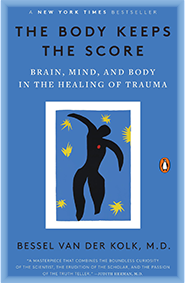
 Bessel van der Kolk is also the author of the New York Times bestselling book, The Body Keeps The Score: Brain, Mind,
and Body In The Healing of Trauma. This book details his research on the impact of trauma, many of the experiences he had in clinical
practice, and treatment methods and techniques that best manage traumatic encounters and their physical manifestations. Van der Kolk
suggests that the body is a bridge to releasing trauma stored in the tissue and non-talk therapies such as EMDR, massage therapy, meditation,
neurofeedback, and yoga, are better suited to resolving the underlying trauma and its symptoms.6 He theorizes that emotional awareness is an
important process in effectively addressing trauma and the processing of those sensations or feelings viscerally is more therapeutic than
traditional talk-based therapy, which often trigger flashbacks or worsen symptoms.
In The Body Keeps The Score: Brain, Mind, and Body In The Healing of Trauma, Van der Kolk illustrated the point that non-talk therapies such as massage therapy and neurofeedback often provide greater
relief and better results among trauma patients than traditional talk-based counselling. He discussed his findings from working with
 veterans, other clinical experiences he had as a psychiatrist, and an independent analysis of the effectiveness of various therapies administered
to survivors of the 9/11 attacks on the U.S. World Trade Center. His discussion about treatment recommendations made to 9/11 survivors for
coping with their catastrophic trauma is particularly insightful. Expert panels that were employed after the attacks by several organizations
including the National Institute of Health ultimately concluded that two talk-type therapies would be the most effective. Despite these
recommendations, few people actually sought out counselling. Instead, first responders overwhelmingly reported that massage best helped
resolve the trauma that they experienced. Survivors similarly reported that manual therapies such as "acupuncture, massage, yoga, and EMDR, in
that order" best managed their trauma and provided the most therapeutic treatment.7 These results lend credibility to Van der Kolk's reservations
about relying solely on talk-type therapy alone, which stemmed from the limitations of language itself and the inevitable retriggering of trauma.
The works of F.M. Alexander, Dr. Ida P. Rolf, Moshé Feldenkrais, Thomas Hanna, and Dr. Bessel van der Kolk have transformed the field of somatic therapy and the world. Their contributions have provided much needed context to patients and healthcare practitioners alike about what the body experiences and how to treat that which we cannot see. The beauty of somatic therapy is in its simplicity, and it serves as a reminder that we are stronger together ... whether that refers to our body and mind collectively, as a group of living beings, or both.

1 Merriam-Webster, "Soma," last updated July 5, 2026, https://merriam-webster.com/dictionary/soma.
2 Christina Caron, "How Some People Are Incorporating Movement in Their Therapy Sessions." New York Times, April 6, 2026, https://nytimes.com/2026/04/06/well/mind/somatic-therapy.html.
3 John Gray, "Working On Oneself (1)" in Your Guide to the Alexander Technique (London: Victor Gollancz Ltd., 1990), 71.
4 Thomas Myers, "A Brief History of Anatomy Trains," Anatomy Trains, last updated July 1, 2026, https://anatomytrains.com/about-us/history/.
5 "Bessel van der Kolk full bio," Trauma Research Foundation, last updated July 1, 2026, https://traumaresearchfoundation.org/about/board-members/bessel-van-der-kolk-full-bio/.
6 Bessel A. van der Kolk, M.D., The Body Keeps the Score: Brain, Mind, and Body in the Healing of Trauma (New York: Penguin Books, 2014), 239.
7 Van der Kolk, The Body Keeps the Score, 233.

Feel Like Yourself Again!
604.513.8161