
Visceral Manipulation
Visceral Manipulation (VM) is a gentle therapy developed by
French Osteopath Jean-Pierre Barral. VM therapists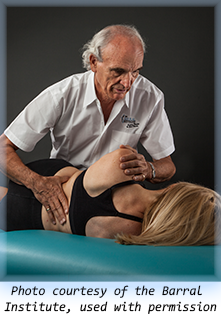 manually massage and mobilize the soft tissues
associated with internal organs, also known as viscera, and their surrounding structures. The more supple the soft tissues are, the
more comfortably and freely the body moves.
Soft tissues are found throughout the body and serve a variety of functions which include supporting and protecting organs and other bodily structures, providing form to the body, regulating body temperature, transporting blood or lymphatic fluid, and storing energy. Some types of soft tissues are fascias, fat (adipose tissue), ligaments, muscles, nerves, tendons, and vessels.
Like many types of soft tissues, fascia consists of fibrous connective tissue. Fascia is organized differently than other soft tissues however and is made up of three-dimensional networks of thin connective tissue that resemble cotton candy. These fascial connections exist between organs; from organs to muscles such as the diaphragm and psoas; from organs to bones such as the pelvis, ribs, and spine; and from organs to nerves and vessels.
 Since the body is composed of a complex network of soft tissues, localised fascial tension or restriction can alter how nearby tissues
move and may create compensations in other parts of the body. Changes in the tissue mobility of organ-specific fascia, which is connected to a
wide range of bodily structures, may affect the movement of related joints, muscles, nerves, vessels, etc. Tissue mobility and suppleness may
be influenced by diet, everyday physical stresses, infection, injury, posture, and surgery. VM techniques gently work with areas of tension and
restriction to improve tissue mobility, enhance comfort, and allow the body as a whole to move more freely.
Visceral Manipulation is a useful therapy for treating:
Over the past two decades, I completed thousands of hours of Visceral Manipulation training from The Barral Institute. I regularly attended VM mentor/peer study groups during much of that time and continue to do so today. I also volunteered as a teaching assistant in many VM courses offered by The Barral Institute. Helping teach VM courses reinforced these concepts and afforded me the opportunity to share my experience in this modality with other practitioners.
As a Registered Massage Therapist in British Columbia, I am a member of each patient's medical team. According to British Columbia's Complementary Health Professionals Regulation, it is within my scope of practice as an RMT to assess the physical health of patients; prevent, treat, and manage disorders and conditions of joints and soft tissue; and advise patients about the health and care of joints and soft tissue.1 In compliance with these guidelines, I selectively use manual therapy modalities that complement my treatments; promote, maintain and restore physical health; rehabilitate and improve physical function; and relieve pain. I often rely upon the organ-specific fascial release techniques of Visceral Manipulation as they address soft tissue restrictions that would otherwise lead to imbalances, impair mobility, and create discomfort.

1 Section 13(1) of the Complementary Health Professionals Regulation

Feel Like Yourself Again!
604.513.8161